

Electrical
Hurricane Season Prep for Your Home's Electrical System: A Jacksonville Homeowner's Guide
Generators, transfer switches, surge protection, and what to do after flooding. A practical hurricane electrical prep guide for Jacksonville homeowners.
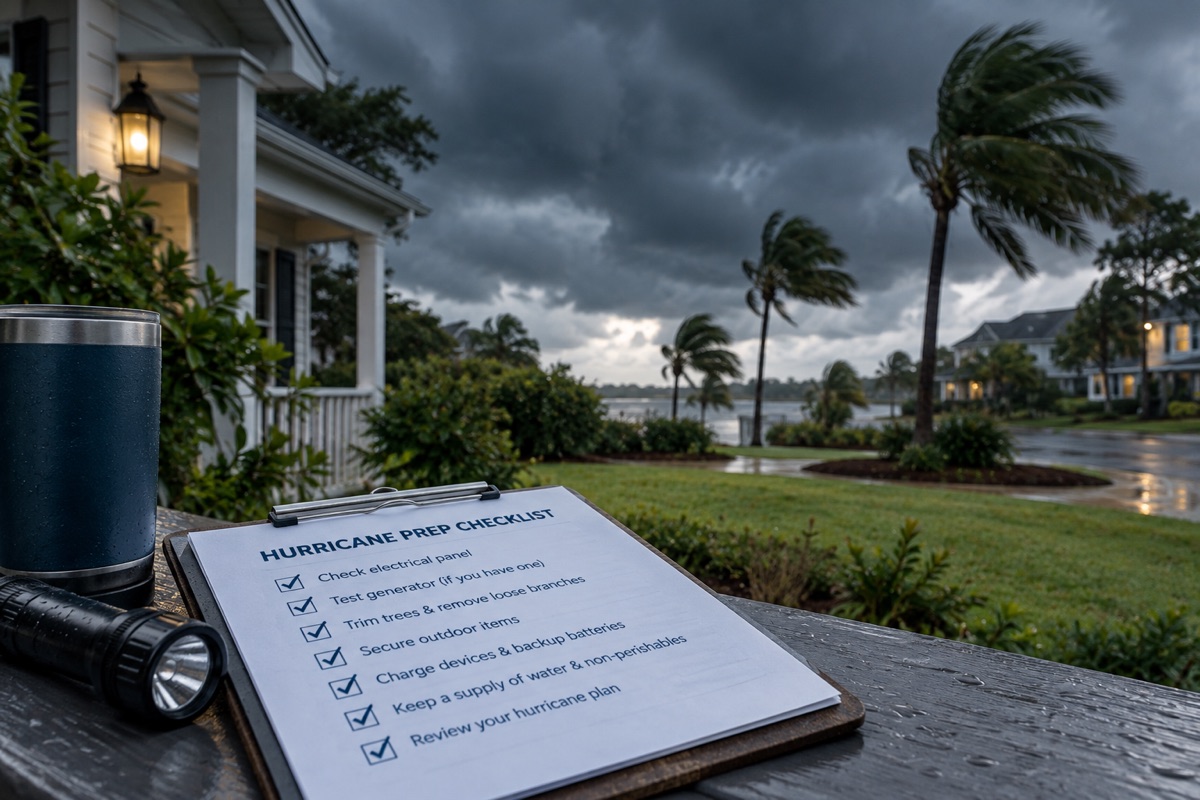
Every Jacksonville homeowner knows the drill when a storm shows up in the forecast: water, batteries, gas in the car, and a long line at the hardware store. What usually gets less attention is the electrical side of things, until the power goes out and stays out.
Hurricane season runs from June 1 through November 30, and even a storm that doesn’t hit Northeast Florida directly can knock out power for days. Planning your home’s electrical setup ahead of time makes outages safer, more comfortable, and a lot less expensive. Here’s what we recommend.
Decide How You’ll Keep the Power On
The first question is what you actually need running during an outage. For some families that’s a refrigerator, a few lights, and phone chargers. For others it’s the AC, a well pump, medical equipment, or a home office. Your answer points you toward one of three options.
Portable Generators
A portable generator is the most affordable way to get backup power. They’re great for running essentials, but they come with real limitations:
- You have to refuel them, often every several hours, and gas can be hard to find after a storm.
- Most can’t run central air conditioning.
- Running extension cords through windows and doors is a hassle and a safety risk.
The bigger issue is how a portable generator connects to your home. More on that below.
Portable Generator + Transfer Switch or Interlock Kit
This is the sweet spot for many Jacksonville homeowners. A licensed electrician installs either a manual transfer switch or a generator interlock kit on your electrical panel, plus an exterior inlet where you plug in the generator.
Once installed, you roll the generator out, plug in one cord, flip the switch, and power the circuits you’ve chosen directly through your panel. No extension cords snaking through the house, and no risk of sending power back onto the utility lines.
Whole-Home Standby Generators
A standby generator is permanently installed outside, runs on natural gas or propane, and kicks on automatically within seconds of an outage. Paired with an automatic transfer switch, it can run your entire home, AC included, without you lifting a finger.
Standby generators are the bigger investment, but for households with elderly family members, medical needs, home businesses, or anyone who simply doesn’t want to sweat through another week without AC, they’re worth considering.
Sizing matters. An undersized generator will struggle with AC startup loads; an oversized one wastes money and fuel. A load calculation from an electrician is the right starting point.
Never Backfeed Your Home
If there’s one thing to take away from this article, it’s this: never plug a generator into a wall outlet or dryer outlet to power your house. This practice, called backfeeding, is common after storms and extremely dangerous.
- It can kill utility workers. Power from your generator can travel back through your service and onto the lines, where it gets stepped up by the transformer to thousands of volts. JEA and mutual-aid line crews working to restore power may not know that line is energized.
- It can electrocute you. “Suicide cords” (male-to-male plugs) have exposed live prongs.
- It can start a fire or destroy your generator when utility power comes back on.
A transfer switch or interlock kit solves this completely. It physically prevents your home from being connected to the generator and the utility at the same time.
Generator Safety Basics
Carbon monoxide poisoning is one of the leading causes of death after Florida hurricanes, and it’s almost always from generators run in the wrong place.
- Never run a generator indoors, in a garage (even with the door open), on a screened porch, or under a carport.
- Keep it at least 20 feet from the house, with the exhaust pointed away from doors, windows, and vents.
- Install battery-powered or battery-backup CO detectors on every level of your home.
- Let the generator cool before refueling, and store fuel in approved containers away from the house.
- Test-run your generator before the season starts, and again when a storm is in the forecast. Old fuel is the most common reason generators won’t start.
Protect Against Surges
Hurricanes and the thunderstorms that come with them are a perfect recipe for power surges, both from lightning and from the utility grid flickering on and off during restoration. Surges can quietly damage your AC compressor, refrigerator, TVs, computers, and EV charger.
A whole-home surge protector, installed at your electrical panel, is your first line of defense. It’s an inexpensive upgrade compared to the equipment it protects, and current code requires surge protection when a home’s electrical service is installed or replaced. Plug-in surge strips are still useful for sensitive electronics, but they’re a second layer, not a substitute.
Know Your Panel Before the Storm
When the lights go out, you don’t want to be squinting at a panel you’ve never opened. Before the season:
- Make sure your breakers are clearly labeled. If you’re running a generator through a transfer switch or interlock, you’ll need to know exactly which breakers to turn on.
- Know where your main breaker is and how to shut off power to the whole house.
- Watch for warning signs: breakers that won’t reset, scorch marks, rust, or a panel that feels warm. Older panels, including Federal Pacific and Zinsco models, deserve a closer look. (Our panels and breakers guide covers this in more detail.)
Smaller Steps That Make a Big Difference
- Charge everything early. Phones, power banks, laptops, rechargeable fans, and lanterns.
- Consider a battery backup for your Wi-Fi router and modem so you can stay connected as long as cell towers are up.
- Have an EV? Charge it fully before the storm. Some newer vehicles and chargers can even power parts of your home. (See our EV home charging guide.)
- Unplug sensitive electronics before the storm hits if you don’t have whole-home surge protection.
- Turn off and unplug major appliances if you’re evacuating.
- Write down your outage reporting info. Report outages to JEA through their website or mobile app rather than assuming a neighbor already did.
After the Storm: Stay Safe
The most dangerous electrical hazards often show up after the wind dies down.
- Treat every downed line as live. Stay at least 35 feet away and report it to JEA. Don’t drive over lines or through water they’re touching.
- If water reached your outlets, panel, or appliances, don’t turn the power back on. Flooded electrical components can short, shock, or start fires long after they dry out. Have an electrician inspect your system before re-energizing.
- Watch for damage at your service mast and meter. If the weatherhead, mast, or meter base is pulled away from the house, the repair on your side is typically the homeowner’s responsibility, and the utility usually won’t reconnect until it’s fixed and, in many cases, inspected.
- When power returns, turn things on gradually. Start with essential circuits, wait a few minutes, then bring larger loads like the AC back online.
- Notice anything unusual? Flickering lights, burning smells, buzzing, or breakers that keep tripping all warrant a call to a licensed electrician.
Plan Now, Not When the Cone Points at Jacksonville
Once a storm is in the forecast, electricians, generator dealers, and permit offices all get busy fast, and generators sell out. The best time to install a transfer switch, interlock kit, standby generator, or surge protector is before you need it, ideally in the off-season.
Most generator and transfer switch installations in Jacksonville require a permit and inspection, which is another reason to plan ahead and work with a licensed contractor.
How Copper & Co. Can Help
Copper & Co. helps Jacksonville homeowners get storm-ready with:
- Generator interlock kits and manual transfer switches
- Whole-home standby generator installation and load calculations
- Whole-home surge protection
- Panel inspections, upgrades, and labeling
- Post-storm electrical inspections and repairs, including service mast and meter base damage
This article is for general information. Generator sizing, transfer equipment, and permit requirements depend on your home’s electrical service and local code. Always use a licensed electrician to connect a generator to your home.
Frequently asked questions
What's the difference between a transfer switch and an interlock kit?
Both let you safely power selected circuits from a portable generator through your panel, and both physically prevent your home from being connected to the generator and the utility at the same time. A licensed electrician installs either one along with an exterior inlet for the generator cord.
Can a portable generator run my central air conditioning?
Usually not. Most portable generators can't handle a central AC's startup load. A properly sized whole-home standby generator with an automatic transfer switch can run your entire home, AC included.
Is it safe to plug my generator into a dryer outlet?
No. That's backfeeding, and it can send power onto the utility lines, endanger line crews, electrocute you, and start a fire or destroy the generator when utility power returns.
How far from my house should a generator be?
At least 20 feet, with the exhaust pointed away from doors, windows, and vents. Never run it indoors, in a garage even with the door open, on a screened porch, or under a carport.
My service mast or meter base was damaged in the storm. Who fixes it?
The weatherhead, mast, and meter base on your side are typically the homeowner's responsibility, and the utility usually won't reconnect until they're repaired and, in many cases, inspected. A licensed electrician can make the repair.
Do I need a permit to install a generator or transfer switch in Jacksonville?
Most generator and transfer switch installations require a permit and inspection, which is one more reason to plan ahead and work with a licensed contractor before storm season.