

A/C
How to Cut Your A/C Costs in Jacksonville as JEA Rates Go Up
JEA's new rates start October 1. Here's how Jacksonville homeowners can save money on their A/C: thermostat settings, smart thermostats, insulation, maintenance, and when an upgrade makes sense.
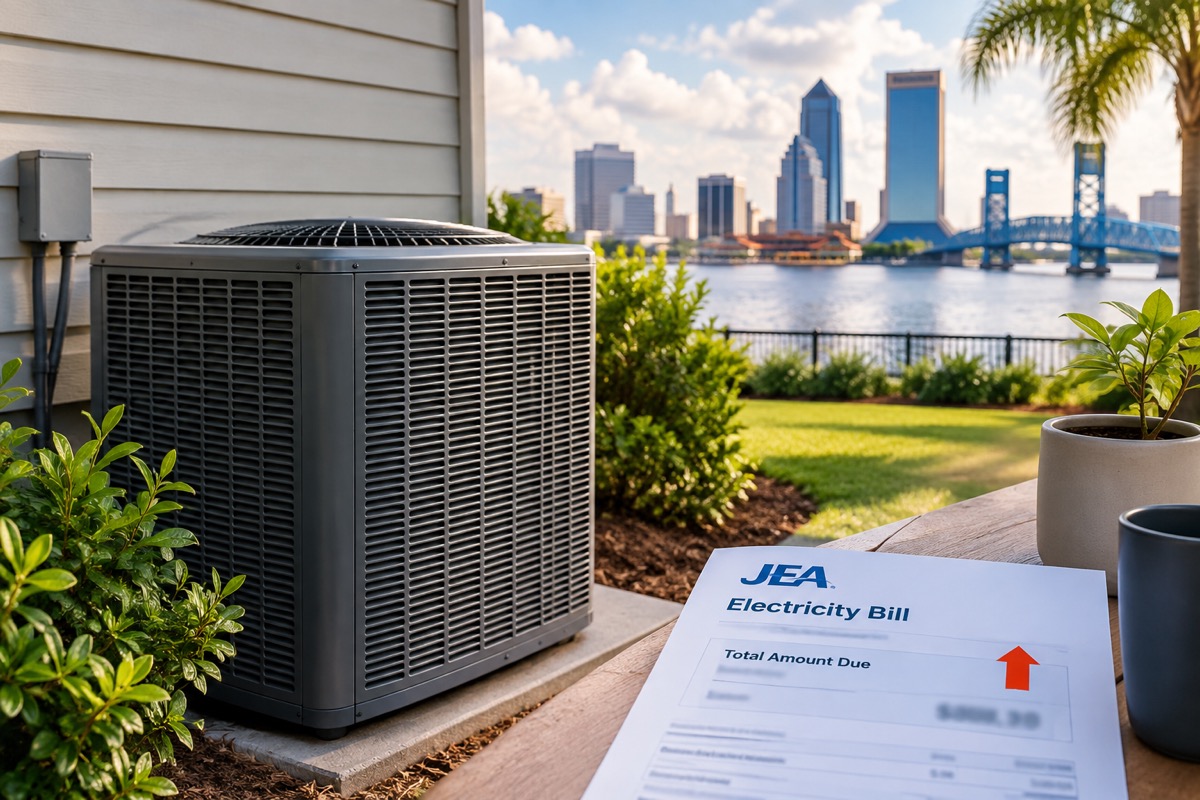
If your JEA bill has made you wince this year, you’re not alone. It’s been a bumpy year for Jacksonville electric customers, and more changes start October 1, 2026.
What’s going on with JEA rates?
A few things are happening at once:
- Fuel costs jumped early in the year. A hard cold snap in early February pushed power demand near record highs and drove up natural gas prices. JEA’s fuel charge, which is passed straight through to customers, peaked in March at $59.68 per 1,000 kWh. It has come down since, but fuel prices move with the market and are expected to keep swinging.
- Base rates go up October 1. In June, the JEA board unanimously approved a base-rate increase. For a typical home using 1,000 kWh a month, the base portion of the bill rises from about $153.92 to $156.33. JEA says the money covers a projected revenue gap. That gap is driven by a planned $1.57 billion natural gas plant, its debt for Plant Vogtle, aging infrastructure, and Northeast Florida’s fast growth. Water and sewer rates are going up too.
- People are pushing back. Local residents have started petitions against the increases. JEA has said it understands “the pressure that higher costs can place on our customers.”
The bottom line: JEA sets the rates, but you control how many kilowatt-hours you use. In a Jacksonville home, cooling is usually the biggest single part of the electric bill, so your A/C is the best place to start saving.
1. Set the right temperature (and stop fighting your thermostat)
JEA recommends 78°F in summer and 68°F in winter. That can feel warm at first, but a few habits help:
- Raise it when you’re away. The U.S. Department of Energy estimates you can save up to about 10% a year on heating and cooling by adjusting your thermostat 7–10°F for 8 hours a day, such as while you’re at work.
- Don’t crank it down to 65°F to cool off faster. Your system cools at the same speed no matter what number you pick. A lower setting just makes it run longer and overshoot.
- Use ceiling fans. Moving air makes a room feel about 4°F cooler, so you can raise the thermostat without feeling it. Turn fans off when you leave the room, because they cool people, not rooms.
- Watch the humidity. Jacksonville’s humidity is often why 78°F feels sticky. A properly sized, well-maintained system removes moisture as it cools. If your home feels clammy at 76–78°F, that’s a sign to have your system checked.
2. Upgrade to a smart thermostat
A smart thermostat is one of the cheapest efficiency upgrades you can make. It pays off because it does the adjusting for you:
- Schedules and geofencing raise the temperature when everyone leaves and start cooling before you get home.
- Usage reports show exactly when your system runs hardest.
- Remote control from your phone means you never cool an empty house all weekend.
ENERGY STAR-certified smart thermostats save the average household about 8% on heating and cooling. Check JEA’s rebates page for current offers on efficient equipment before you buy.
3. Maintenance: the cheapest savings there is
A neglected system can use a lot more energy to do the same job. Some things you can do yourself:
- Change your air filter every 1–3 months. In summer, or with pets, check it monthly. A clogged filter makes the blower work harder and can freeze the coil.
- Keep the outdoor unit clear. Leave at least 2 feet of space around it. Trim shrubs and clear off leaves, pine straw, and grass clippings.
- Keep supply and return vents open and unblocked. Closing vents in unused rooms doesn’t save energy. It raises pressure in the ductwork and can increase leakage.
- Flush the condensate drain line. In our humidity, clogged drain lines are one of the most common summer service calls.
Once or twice a year, have a professional tune-up. A technician will clean the coils, check the refrigerant charge, test the electrical parts and capacitor, and measure airflow. Catching a weak capacitor or a low charge early saves energy and helps prevent a breakdown in the middle of August.
4. Seal and insulate: keep the cool air you pay for
Your A/C can only keep up if your house holds the cool air.
- Attic insulation: Florida attics routinely reach 130°F or more in summer. ENERGY STAR recommends R-30 to R-60 attic insulation for our climate. Many older Jacksonville homes have far less, or insulation that has settled over the years.
- Ductwork: ENERGY STAR estimates the typical home loses 20–30% of the air moving through its ducts to leaks, holes, and poor connections. Ducts in a hot attic are costly twice over, because you lose the cold air and pull in hot attic air. Sealing and insulating ducts is often one of the best-value fixes available.
- Air sealing: Caulk and weatherstrip around doors, windows, attic hatches, and where plumbing and wiring pass through walls.
- Block the sun: Close blinds on east- and west-facing windows during the hottest part of the day. Solar screens or window film help even more.
5. Know when an upgrade makes sense
If your system is 12–15 years old or more, it may be costing you more to run than a replacement would. Older units were often rated at 10 SEER or lower. Today’s federal minimum for new systems in the Southeast is 14.3 SEER2, and high-efficiency models go well above that.
Signs it may be time:
- Your energy bills keep rising even though your habits haven’t changed
- Frequent repairs, or a system that still uses R-22 refrigerant
- Uneven temperatures from room to room, or trouble controlling humidity
- The system runs almost constantly on hot days
Consider a heat pump or variable-speed system too. Variable-speed equipment runs longer at low, efficient speeds instead of cycling on and off. That saves energy and removes more humidity, which is a big comfort win in Jacksonville.
Sizing matters as much as efficiency. An oversized unit short-cycles, wastes energy, and leaves the house clammy. A proper load calculation, not a rule of thumb, is how you get it right. If you’re weighing a replacement, get a free quote on a new A/C system.
6. Small habits that add up
- Run the dishwasher, dryer, and oven in the evening, not during the hottest part of the afternoon.
- Grill outside in summer to keep heat out of the kitchen.
- Use bath and kitchen exhaust fans to remove heat and humidity, but don’t leave them running.
- Take advantage of JEA’s free energy efficiency assessments and assistance programs at jea.com.
We can help you save
At Copper & Co. Services, we’re a Jacksonville company. We know what our heat and humidity do to an A/C system and an electric bill. We can help you:
- Tune up your current system to run at peak efficiency
- Install and program a smart thermostat
- Diagnose duct leaks, airflow problems, and humidity issues
- Compare repair and replacement costs honestly, so you can decide if an upgrade will pay off
Rate information is based on JEA announcements and local news reports as of September 2026. Actual bills vary with usage and monthly fuel charges.
Sources
- Jax Daily Record – JEA board approves rate changes effective Oct. 1
- Jacksonville Today – JEA set to raise water and electric rates
- News4Jax – Resident hit with $500 JEA bill pushes petition
- Yahoo/Florida Times-Union – JEA rate adjustments: why and how to save
- American Public Power Association – JEA customers to see lower fuel costs in June
- JEA – Rates
Frequently asked questions
When does the JEA rate increase take effect?
JEA's new base rates start October 1, 2026. The JEA board approved the increase in June. Fuel charges are separate and change with the market.
What temperature should I set my thermostat to in Jacksonville?
JEA recommends 78°F in summer and 68°F in winter. Raising the setting 7–10°F while you're away for 8 hours a day can save up to about 10% a year on heating and cooling, according to the U.S. Department of Energy.
Does closing vents in unused rooms save energy?
No. Closing supply or return vents raises pressure in the ductwork and can increase duct leakage. Keep vents open and unblocked.
How often should I change my A/C filter in Florida?
Every 1–3 months. In summer, or if you have pets, check it monthly. A clogged filter makes the blower work harder and can freeze the coil.
When is it worth replacing my A/C to save energy?
If your system is 12–15 years old or more, it may cost more to run than a replacement would. Older units were often 10 SEER or lower; today's federal minimum for new systems in the Southeast is 14.3 SEER2.