

A/C
Salt Air and Your Outdoor AC Unit: A Coastal Homeowner's Guide
Salt air is hard on outdoor AC units. How it corrodes systems from Jacksonville Beach to Fernandina, and how to make yours last longer.
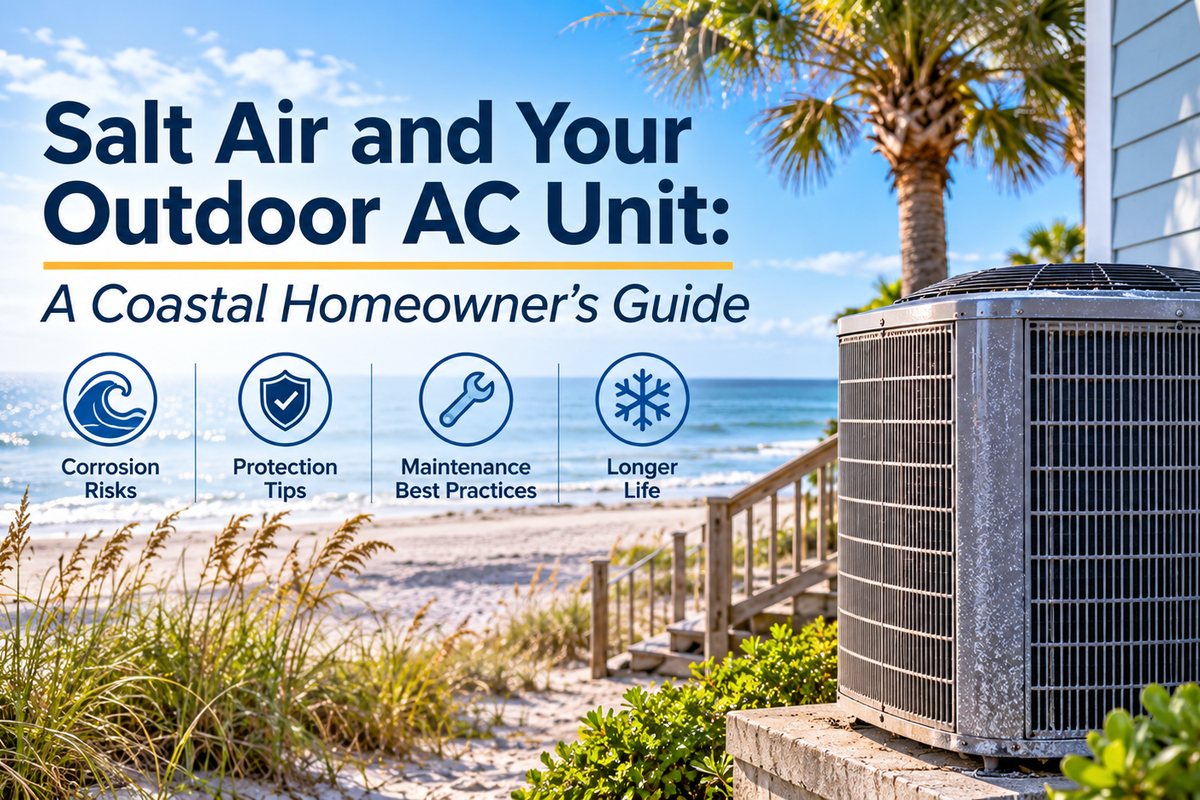
Living near the water is one of the best parts of life in Northeast Florida. Whether you’re in Jacksonville Beach, Atlantic Beach, Neptune Beach, Ponte Vedra, Mayport, Fernandina Beach, or along the Intracoastal, you get the breeze, the views, and the sunsets.
Your air conditioner gets the salt.
Salt air is one of the toughest environments an outdoor AC unit can face. Coastal systems often wear out years sooner than identical units installed inland, and the damage usually happens slowly and quietly until the system starts leaking refrigerant or stops cooling. The good news: a few smart choices at installation and some simple ongoing care can add years to your system’s life.
Why Salt Air Is So Hard on Air Conditioners
Your outdoor unit (the condenser) works by pulling large volumes of outdoor air across a coil made of thin aluminum fins and copper or aluminum tubing. That’s great for releasing heat from your home. Near the ocean, it also means your AC is constantly pulling in salt-laden air.
Here’s what happens over time:
- Salt settles on the coil. Ocean spray and humid air carry fine salt particles that collect on the fins and tubes.
- Salt attracts moisture. Salt draws water out of the air, so the coil stays damp even on days without rain. Northeast Florida’s humidity makes this worse.
- Corrosion takes hold. Salt and moisture together accelerate corrosion of the aluminum fins and the tubing. Where copper and aluminum meet, the combination can cause galvanic corrosion, which eats away at the metal faster.
- Fins crumble, tubes leak. As fins corrode, they flake away and lose their ability to transfer heat. Eventually, tiny pinhole leaks form in the coil tubing, and refrigerant escapes.
The result is a system that works harder, cools less, uses more electricity, and eventually needs a coil replacement or an entirely new unit.
How Close Is “Coastal”?
Homes right on the beach, on the Intracoastal, or facing the ocean take the hardest hit. But salt air travels with the wind, and homes a mile or more inland can still see accelerated corrosion. Properties along the St. Johns River and other brackish waterways are also exposed. If you can smell the ocean from your yard, your AC is breathing it in.
Signs Salt Air Is Damaging Your AC
Walk out to your outdoor unit and take a look. Warning signs include:
- White, chalky, or powdery residue on the fins or cabinet
- Fins that look thin, flaky, or crumble when touched
- Rust on the cabinet, fan guard, screws, or base
- Corroded electrical connections at the disconnect box or inside the unit
- Reduced cooling or longer run times than usual
- Rising electric bills without a change in how you use your AC
- Repeated refrigerant recharges, which usually means a leak in a corroding coil
- Ice on the refrigerant lines, often a sign of low refrigerant
If you’re seeing several of these, it’s worth having a technician evaluate the system before it fails in the middle of summer.
Electrical Corrosion: The Hidden Problem
Salt doesn’t just attack the coil. It also corrodes electrical components, including:
- The disconnect box next to your outdoor unit
- Contactors, capacitors, and terminals inside the unit
- Wire connections and conduit fittings
Corroded electrical connections can cause the unit to fail to start, damage the compressor, or create a safety hazard. Coastal homes benefit from having these components inspected regularly, and corroded disconnects or wiring replaced with corrosion-resistant materials.
Choosing the Right AC for a Coastal Home
If you’re replacing a system near the water, a few choices make a big difference.
Factory Coastal Protection
Many manufacturers offer coastal or “seacoast” options, which may include:
- Factory-coated coils with a protective epoxy or electro-deposition (e-coat) layer that shields the metal from salt
- All-aluminum coils that reduce the copper-aluminum galvanic corrosion problem
- Corrosion-resistant cabinets, fasteners, and base pans
These options usually add to the upfront cost, but for homes near the ocean, they often pay for themselves through a longer system life.
Field-Applied Coil Coatings
If your system doesn’t have a factory coating, a protective coating can be applied to the coil after installation. It’s not a substitute for proper maintenance, but it adds a layer of protection, especially on newer units before corrosion has started.
Check the Warranty
Some manufacturers’ warranties have specific conditions for coastal installations. Before you buy, ask your contractor how the warranty applies to homes near salt water and whether a coastal-rated model is recommended or required.
Placement and Installation Matter
Where your outdoor unit sits can reduce its exposure to salt:
- Shield it from direct ocean spray and wind when possible. A unit on the side of the house facing away from the ocean typically fares better than one facing the beach.
- Don’t box it in. Fences, landscaping, or screens can block some salt spray, but your unit still needs plenty of airflow. Keep at least two feet of clearance on all sides and nothing directly overhead.
- Elevate it in flood-prone areas. Many beach and Intracoastal properties sit in flood zones. Raising the unit on a properly secured stand or platform protects it from storm surge and standing water.
- Secure it for hurricanes. Florida’s building code requires outdoor AC equipment to be properly anchored to resist high winds. On the coast, where storms hit hardest, this is especially important.
Coastal AC Care: What You Can Do
Rinse Your Outdoor Unit Regularly
The single best thing coastal homeowners can do is rinse the salt off the coil with fresh water.
How to do it:
- Turn off the power at the thermostat and the outdoor disconnect.
- Use a regular garden hose with gentle pressure. Never use a pressure washer, which can flatten the fins and force water into electrical parts.
- Spray the coil from top to bottom through the fins, working around the whole unit.
- Avoid spraying directly into the electrical box or control panel.
- Let it dry for a bit, then restore power.
How often? For homes near the ocean, rinsing about once a month is a good habit, plus after any major storm, nor’easter, or stretch of strong onshore wind. Homes farther inland may need it less often.
Keep the Area Clean
- Clear away leaves, grass clippings, sand, and debris from around the unit.
- Aim sprinklers away from the unit. Irrigation water, especially from wells, can leave mineral deposits that also contribute to corrosion.
- Don’t let plants grow into the coil.
Be Careful With Covers
Full covers can trap moisture and salt against the coil, which accelerates corrosion. If you want to protect your unit during the off-season, a breathable cover over just the top of the unit is a better option. Never run the AC with a cover on.
Schedule Professional Maintenance
Coastal systems benefit from professional maintenance at least once a year, ideally twice. A technician can:
- Clean the coil thoroughly with appropriate coil cleaners
- Inspect for early signs of corrosion and refrigerant leaks
- Check and clean electrical connections, contactors, and capacitors
- Inspect the disconnect box and wiring for corrosion
- Recommend protective coatings or repairs before small problems become big ones
How Long Should a Coastal AC Last?
Inland, a well-maintained AC in Northeast Florida often lasts 12 to 15 years or more. Near the ocean, it’s not unusual for an unprotected system to fail several years sooner, mostly due to coil corrosion and refrigerant leaks.
With a coastal-rated system, good placement, regular rinsing, and annual maintenance, you can close much of that gap.
When to Repair and When to Replace
A corroded coil often leads to a tough decision. If your coastal system has a leaking outdoor coil:
- On a newer system, especially one under warranty, replacing the coil may make sense.
- On an older system, a coil replacement plus a refrigerant recharge can be a large investment in equipment near the end of its life. Replacement with a coastal-rated system may be the better long-term value.
The current refrigerant transition adds another layer to this decision. Our refrigerant change article explains why repairs on older R-410A systems are getting more expensive.
Coastal Homeowner Checklist
- Rinse your outdoor unit with fresh water monthly and after storms
- Never use a pressure washer on the coil
- Keep two feet of clearance around the unit
- Aim irrigation away from the unit
- Schedule professional maintenance at least once a year
- Watch for white residue, rust, flaking fins, and reduced cooling
- Have electrical connections and the disconnect checked for corrosion
- When replacing, ask about coastal-rated equipment and coil coatings
- Make sure the unit is properly anchored and elevated if needed
How Copper & Co. Can Help
Copper & Co. helps coastal homeowners from the Beaches to Fernandina keep their AC systems running longer, with:
- Coastal AC maintenance and coil cleaning
- Corrosion inspections and protective coil coatings
- Refrigerant leak detection and coil replacement
- Coastal-rated AC and heat pump installation
- Hurricane anchoring and elevated equipment stands
- Corrosion-resistant electrical disconnects and wiring repairs
Related reading: What’s Wrong With My AC? Common Air Conditioning Problems and How They’re Fixed and The Refrigerant Change: What the R-410A Phaseout Means If Your AC Is Aging
Frequently asked questions
How close to the ocean does salt air damage an AC unit?
Homes on the beach, on the Intracoastal, or facing the ocean take the hardest hit, but salt air travels with the wind and homes a mile or more inland can still see accelerated corrosion. Properties along the St. Johns River and other brackish waterways are also exposed.
How often should I rinse my outdoor AC unit near the beach?
About once a month for homes near the ocean, plus after any major storm, nor'easter, or stretch of strong onshore wind. Homes farther inland may need it less often.
Can I pressure wash my AC unit to get the salt off?
No. A pressure washer can flatten the fins and force water into electrical parts. Turn off the power and use a regular garden hose with gentle pressure, spraying the coil from top to bottom.
Should I cover my outdoor AC unit near the coast?
Full covers can trap moisture and salt against the coil, which accelerates corrosion. If you want to protect the unit during the off-season, use a breathable cover over just the top, and never run the AC with a cover on.
How long does an AC last near the ocean?
Inland, a well-maintained AC in Northeast Florida often lasts 12 to 15 years or more. Near the ocean, an unprotected system can fail several years sooner, but a coastal-rated system, good placement, regular rinsing, and annual maintenance can close much of that gap.